

Stay updated with the latest updates from Himalayan Frontiers
Subscribe to our Newsletter
Everest Base camp
Everest Base camp
Gallery
Duration
Duration

15 days 10 days of trek

Region
Region
  • Everest Region
Activity
Activity

Trekking

Season
Season

Mar – May, Aug – Dec

Get in Touch with our Trek Expert
+91 98211 27042
info@himalayanfrontiers.com
Monday - Saturday: 10 Am to 6 Pm (GMT +5:30)
Request a Quote

Description

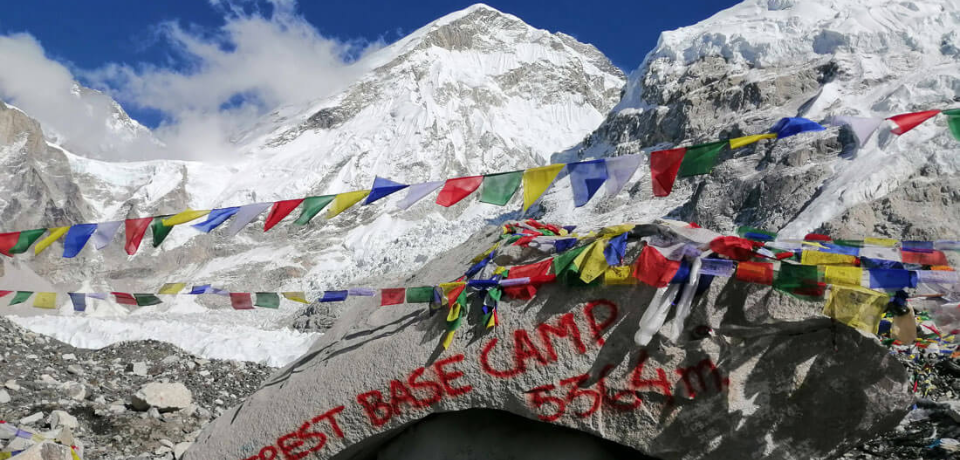
The Everest Region trekking is one of the most popular trekking destinations in Nepal. We explore the worldâs tallest mountain i.e. Mt. Everest with beautiful scenery. Similarly, we also get the chance to flight experience in one of the adventurous airports in Tenzin Hillary airport/Lukla. The airport is built under the supervision of Tenzin Hillary. When there was no airport, Jiri is the gateway for camp trekking. The trip begins with the mountainous flight to Lukla one of the most excessive airports in the world. Then the trail passes through different Sherpa villages. Then hike at the top of the trek and follow the Everest base camp trial. The Everest Base Camp lies at an altitude of 5380meters. But we canât see the view of Mt. Everest from Basecamp. So to see Mt. Everest, we have to climb Kala-Pattar at the altitude of 5545meters. Besides the mountain, this region is also famous for its biodiversity. During our trek, we explore the Sagarmatha National Park. Snow leopard, Himalayan Thar, Himalayan Busk Bear, musk deer Pikka, are the major attraction animals in this region. Therefore the journey is a great way to explore the cultural and adventure experiences in the Himalayan region including lakes and glaciers.

Fix Departure Dates

No fixed departure dates available.

Itinerary

Itinerary

Morning Arrival: If you arrive in the morning, you’ll be greeted with breathtaking views of the Himalayas, bathed in the soft glow of the early sun. The city is buzzing with energy as locals start their day, giving you a perfect blend of natural beauty and the vibrant rhythm of Kathmandu. You’ll have the chance to explore the city’s lively streets, vibrant markets, and perhaps even catch a glimpse of temples as the day unfolds.| Evening Arrival: If you arrive at Kathmandu in the evening, the city will be bustling with lights as the sun sets behind the surrounding hills. The Himalayas may be silhouetted against the fading light. The streets will be lively, with people moving around, and the city will start to glow with streetlights and building lights. The air will feel cooler, and the sky may have a beautiful range of colors as dusk settles in. Evening activities in Kathmandu Can visit asanbazzar, the bazaar in Asan attracts shoppers from all over Kathmandu because of the tremendous variety of merchandise sold here, ranging from foodstuffs, spices and textiles to electronics. Asan is also one of the popular tourist spots in the city because of its architectural sights and

After breakfast we will start for sightseeing tours around in Kathmandu valley, the sightseeing program is focused to introduce some major highlights and UNESCO World Heritage sites within valley, offering a deep dive into religious, historical, and architectural treasures. The key sites we will visit include: Kathmandu Durar Square &KumariGhar: Kathmandu Durbar Square, once the royal palace of the Malla kings. This site is a living museum of traditional Nepali architecture, filled with intricately carved temples, courtyards, and monuments. A major attraction here is KumariGhar, the residence of the living goddess Kumari. This beautifully carved wooden palace is home to a young girl chosen through an ancient tradition to embody the divine female energy. On special occasions, she appears briefly from her balcony to bless her devotees, though she generally lives a secluded life within the palace walls. Swayambhnuath Stupa: This stupa is the most ancient and mysterious of all the holy sites in the Kathmandu Valley. Its white dome, capped with a sparkling golden spire, dominates the valley and is visible from all directions. A stone in scription testifies that the stupa was already an important pilgrimage destination for Buddhists in the 5th century BC. Boudhanath: It is one of the largest stupas in South Asia and is considered to be one of the most important Tibetan Buddhism monuments outside of Tibet. The soaring white dome is decorated with colourful prayer flags. The stupa is surrounded by aTibetan-Majority, and shops sells religious artifacts. Pilgrims encircle around by spinning prayer wheels and offering their devotion. PashupatiNath: The shine is dedicated to Lord Shivain his manifestation as Pashupati. It is considered as one of the most sacred shrines of all the Hindu temples. Located along the banks of the sacred Bagmatiriver. Its intricate architecture and the rituals performed witness the deep insight into Hindu spirituality and funeral practices.

Early Morning Drive to Ramechhap airport for the flight to Lukla (Now a days flight to lukla take off from Ramechhap airport) we take pack breakfast from hotel, on reaching airport morning flight to Lukla (2,800m), a gateway destination from where our trek starts. After an adventurous 25 minute flight above breathtaking green and white mountains, we reach the Tenzing-Hillary Airport at Lukla. This is one of the most beautiful air routes in the world culminating in a dramatic landing on a hillside surrounded by high mountains peaks. Here we meet our other crew members and after some packing and arrangements, we start our trek through the prosperous village of Lukla until we reach Phakding. To assist in acclimatization, we only have a short hike today. However, if interested in additional activities we can take a side trip to a nearby monastery.

Walking through a beautiful pine forest, the track leads us along the DudhKoshi River through many suspension bridges, you can also see the famous Hillary Suspension Bridge on the way. First, we catch wonderful prospect of the glistening Mt. Thamserku (6618 m). Through the settlement of Benkar, Chumoa, Monjo, we come to the check post and entrance to Sagarmatha National Park. We pass through the last village of Jorsale before reaching Namche Bazaar. The trail climbs through the forests and bridges until we reach the confluence of the DudhKoshi and BhoteKoshi rivers. After a final steep ascent of about two hours we get first sight of Mt. Everest peering over the Lhotse-Nuptse ridge. We stop at Chautara to admire the view. We still need to hike about 1.5 hours to reach Namche Bazaar, a gateway to Mt. Everest and main trading centre of this region.

This is the scheduled 'acclimatization' day for this trek. Health experts always recommend us to stay active and moving during the rest day too instead of being idle. We either spend the day taking a day hike and relaxing and exploring hundred vertical feet during the day, it will help us to properly acclimatize. Our guides will take us to the Tourist Visitor Center near the headquarter of the Sagarmatha National Park where we can observe an assortment of things related to the first Everest ascenders, Sherpa culture and learn about the various plant and animal life of the Everest region. We also take an interesting side trip up to Khumjung. We climb up to the famous airstrip at Syangboche. Just above the airstrip is the Everest View Hotel, a Japanese scheme to build a deluxe hotel with great views of the highest mountains on Earth. The Khumjung valley is surrounded by the snowy peaks of Kongde and Thamserku Namche Bazaar itself. Namche Bazzar is the main centre of the Everest (Khumbu) region and has government offices, ATMs, Internet cafes, shops, restaurants, a bakery and a colorful market each Friday evening and Saturday.

After breakfast in Namche, we start our trek towards Tengboche enjoying superb view of Mt. Everest, Nuptse, Lhotse, AmaDablam and close up view of Thamserku. Our trek follows on the gradual trail with few ups and downs overlooking magnificent view of the great Himalaya. Along the way we can spot wild lives like pheasant, musk deer, or a herd of Himalayan Thar. The trail goes gradually down up to Kayangjuma. The path eventually reaches Sansa which is the major trail junction to Gokyo valley and Everest Base Camp. The track then follows through the pine forests and after we cross the prayer flags festooned bridge over DudhKoshi River, we reach PhunkiThenga, a small settlement with a couple of teahouses and a small army post amidst the alpine woods. After having a relaxed lunch at PhunkiThenga we then have a little tough climb steep up through the pine forests while before we reach Tengboche. Tengboche is a great place for close up views of Ama-Dablam, Nuptse, and Everest and it has a biggest Buddhist Monastery all over in Khumbu region. We visit the monastery the same day at around 3 p.m. to witness the ceremony in the principal and popular monastery of Everest region.

Mountains as a backdrop, the monastery in Tengboche looks spectacular more in the morning. We snap pictures of the monastery and the sceneries around and as usual start the day journey. We choose the upper trail for better views to visit Pangboche village and its ancient Monastery. We pass through several Chortens and Mani walls and small villages. We enjoy lunch with fantastic close-up views of Ama-Dablam. Take the eastward trail beneath the towering north face of AmaDablam. From here onwards the walk is fairly moderate as we enter the Imja Valley. The valley ahead will begin to open up as we approach the confluence of the Lobuche River, we descend into the river and begin the last and steepest climb of the day up to Dingboche On arrival in Dingboche, we enjoy the beautiful array of fields enclosed by stone walls to protect the barley, buckwheat and potatoes from the cold winds and grazing animals.

Beyond Duglha we trek up the steep terminal moraine of the Khumbu Glacier. We find our way through the boulder-strewn slope as we ascend ChupkiLhara, an eerie ridge top with dramatic mountains views. At the top of the ridge we will find an array of stones with prayer flags used as memorials to Scott Fischer (American mountaineer) and 10 times Everest submitter BabuChiri Sherpa (mountain guide from Nepal) who perished on a mission to climb Everest. As the trail drops to the Khumbu Glacier moraine, we find ourselves right "in front of" several great peaks - Khumbutse, Lingtren, Pumori and MahalangurHimal. We are now in the vicinity of Everest but the great mountain still remains hidden. Nuptse towers to the right as the trail crosses the Khumbu Glacier. As we trek along a murmuring stream we do not see the Khumbu glacier because of its lateral moraine wall and we now begin to feel a little out of breath due to high altitude.

The trail to GorakShep goes ahead through the lateral moraine of the Khumbu Glacier. We pass though the pyramid sign post. Ahead on the trail we see crest of north ridge of Everest along with Mt. Pumori, Mahalangur, Lingtern, Khumbutse, Nuptse, etc. A small ascent would take us to ThangmaRiju. As we reach GorakShep, we will be surrounded by snow-capped mountains looming all around us including the top of the world - Mount Everest. After a brief lunch and rest, we take the trail to Everest Base Camp through the once vast GorakShep. Exploring around EBC we trek back to Gorakshep for overnight stay.

Today we start early in the morning to catch the dramatic views from Kala Patthar witnessing the first light of day shining on Mount Everest. Further, there is always the potential for chilly wind which is quite common. Familiar peaks such as Lingtren, Khumbutse, Changtse tower to the east even as Everest begins to reveal itself emerging between the west shoulder crest and Nuptse. As we reach the top, we sit on the Kala Patthar where rocks our eyes taking unbelievable Himalayan Panorama. On being back have breakfast in lodge and we trek forward to Pangboche. Leaving behind the views of the High Himalaya we trek forward to the Pangboche Village. There is a famous monastery at Pangboche believed to have been the oldest in the Khumbu region. From Pangboche, we descend down the alpine desert and back into greenery of pine forests.

After breakfast, we start our trek, we walk about one hours all the way down to the river then uphill with crossing the prayer flag festooned bridge over the DudhKoshi River trail then follows the DudhKoshi gorge descending rapidly through the pine forests. The path eventually reaches Sansa which is the major trail junction in the region. We stop at Kyangjuma (3570 m) for a relaxed lunch. We unknowingly appreciate the gorgeous AmaDablam, Thamserku and Nuptse with every bite. Following lunch, the trail to Namche Bazaar clings to the steep wooded slope beyond Kyangjuma, winding through several bends. We keep a lookout for wild life such as mountain goats, snow leopards, colorful pheasants, etc., while we pass through the forest by the trail. After passing a Chorten, we reach the army camp at of Namche Bazaar. We want to take a long last look (and picture!) back to Lhotse, the tip of Everest and Tengboche from here. On reaching our lodge, we take a nice hot shower and have very relaxed sleep in our room in Namche Bazaar.

We snap a mixture of open plains, rhododendron and pine forests, and in the distance snow covered peaks. We walk through the Sherpa villages' noticing impressive faith in Buddhism and culture of prayer stones and prayers flag while we walk through the villages. On arrival in Lukla, we stretch those sore legs and recall the experiences of the last couple of weeks. We experience the culmination of a fantastic trek on a happy note with everyone back safe and sound with smile on their faces.

For Inquiry

Cost

Dates Availability Price
No fixed departure dates available yet.

Dates don't fit?

Create a Private Trip
If you have your own group, talk to us about turning this itinerary into your own private adventure.

What's Inside the Package?


Inclusions

checkArrival and transfer from to international and domestic airport in Kathmandu and Ramechhap

checkWelcome dinner by arrival

checkHotel 3* with bed and breakfast in Kathmandu as per mention category in twin sharing basis

checkSightseeing with cultural guide and private transport in Kathmandu as mention in Program

check3 meals a day during trekking (B+ L+ D- Set menu) recommended vegetarian due to hygiene reason

checkStaff Insurance, wages and Equipment

checkNational Park permits and TIMS

checkEnglish speaking 1 guide and porters during trekking (1 porter for 2 clients)

checkDomestic flight from Ramcehhap to Lukla to Ramechhap

checkDomestic airport tax

checkPrivate transport from Kathmandu to Ramechhap airport to Kathmandu

checkTwin sharing accommodation in lodge during trek (normal Lodge may change at the time of Booking according to its availabilities)

checkMonument entrance fees during sightseeing

Exclusions

closeLunch and dinner in Kathmandu

closeBeverages including bottle water, tea house refreshment on the way

closePersonal insurance and helicopter rescue in case of emergency

closeInternational flight ticket

closeNepal visa (at arrival at the international airport of Kathmandu, for USD 30 for 15 days)

closeSleeping bag

closePersonal expenses such as laundry, drinks, telephone call, wifi, mobile and camera charging, hot shower.

closeTips for staff

closeOther services which is not mention in above program

Highlights

  • Scenic mountain flight from Kathmandu to Lukla
  • Trek the classic EBC trail through Sagarmatha National Park
  • Explore traditional Sherpa and Tibetan villages with cozy teahouse stays
  • Visit vibrant Namche Bazaar, the gateway to Everest
  • Witness stunning views of Mt. Everest, AmaDablam, Thamserku, Cho Oyu, and more
  • Experience the wonder of the Khumbu Icefall and glaciers
  • Stand at the base of the world’s highest mountain
  • Visit sacred sites like Tengboche Monastery for a spiritual touch
  • Gain insight into the unique culture and lifestyle of the Sherpa people

General Information

Calculate Your BMI
Your BMI value is
--
Calculate your BMI
BMI RangeCategory
Less than 16.5Severely Underweight
16.5 - 18.5Underweight
18.5 - 25Normal
25 - 30Overweight

Hotel mentioned in cities are based on 3* category. You will have twin or Double sharing room, those who wish to have single room, it will be subject to additional charges (as single room surcharges) and are requested to put the request in advance to assure the availability.

During the trek you will get accommodation in locally run lodges and guest houses. You will get twin sharing room or may be at certain places where accommodation are limited you will share triple or quadruple bases.


In the mountains, especially during the high trekking season, it is often not possible to get a single room due to the limited number of lodges and the high number of trekkers.

As a result, accommodation must be shared and adjusted as described above in accommodation column. If the is room available and clients want to have single room than it will cost USD 10 -15 per night this can be done on the spot subject to availability.


Where meals are not included as in the city of Kathmandu, there are abundance choices of restaurant of Nepalese, Indian, Chinese and continental delicacies.  You can calculate10 USD per person per lunch and 15 USD per person per dinner in standard tourist restaurants. However you can go beyond the mentioned budget or can find the budget friendly restaurant in the streets. 


Tea houses/lodges are with Breakfast, Lunch and Dinner where beverages as bottle water remain at your own charge, you can use the boiling or purifying water pills on trek is advised.


In most of the lodge and guest houses toilet and bath room will be common either outside or inside the building. You will enjoy cold water bath by buckets and mug or cat bath. To get hot water buckets you have to pay certain amount of Nepalese rupees (equivalent in USD varies from 3 to 10 usd in Everest region) which is not hefty amount keeping in mind the available resources of energy to heat the water due to geographic location, higher you trek the amount of hot water bucket fee increase which can be an additional add on to the seasonal economy of locals. Where you will find attached bath room facilities such additional amount to get hot water will be not applied.


Fee to  charging camera/mobile in lodges 1 time cost: While trekking there is certain amount to be paid when charging the camera or Mobile battery at each lodges and guest houses, in  Everest Region: about USD 3 to USD10 (Higher you go the cost rise high)


Our guide will carry the first aid Kit including medicine for altitude sickness (diamox), pain relievers, anti-diarrheal medication bandies, Antihistamines for allergies. Don’t forget to bring Personal Prescription Medication.

Prevention: Stay hydrated (3–4 liters/day), Avoid alcohol, smoking, and sleeping pills

Carry light backpacks.

Symptoms: Mild headaches, nausea, or fatigue; requires immediate rest or descent if worsening.


Sagarmatha National Park Permit, Rural Municipality Permit and TIMS card (Trekking Information Management System).


Trekking itineraries may be altered due to landslides, weather, or local events.

Vehicle breakdowns, roadblocks, or unforeseen local disruptions may require alternative transport.

Client cooperation is requested any extra costs incurred locally must be bare by the client.


Company is not liable for flight cancellations, natural disasters, political unrest, and strikes.

Any additional accommodation, transport, or emergency expenses must be covered by the client.


Mandatory for all clients. Must cover: medical expenses, evacuation, altitude sickness, loss of baggage, trip cancellation, helicopter or ground rescues.


We use Private vehicles as per group size to save the time and to get the liberty of necessary stop where need be.

Domestic flights is include in the cost

Trekking luggage carried by porter, max 15-20 kg per porter


Domestic flights (Ramechhap - Lukla): 10kg check-in + 5kg cabin. Exceeding weight incurs additional charges paid directly by clients


Approx. 4–8 hours/day, depending on terrain and individual pace


Footwear:

Trekking boots (well broken-in and waterproofed)

Woolen socks

Cotton socks

Clothing:

Down jacket or equivalent with hood

Heavy wool shirt or sweater

Two cotton shirts

One pair of cotton trousers

One pair of woolen trousers

Underwear (Thermal or Wool)

Weather Protection:

Windproof and Water proof jacket with hood

Sun hat

Woolen hat or balaclava

Woolen gloves

Gear and Essentials:

Personal first-aid kit

Flashlight or head-lamp (with extra batteries)

Sunglasses or snow goggles (extra pair recommended)

Water bottle

Pocket knife

Rucksack

Sleeping bag (warm and compact)


Respect local culture, monasteries, and religious rituals

Remove shoes at temples, dress modestly

Take photos with permission from people, temple or other religious places


Full Wi-Fi and mobile coverage (Nepali-Sim) available in cities. Wi-Fi is also available in most teahouses along the trekking route


Nepalese Rupee (NPR)

ATMs available in major towns, carry sufficient cash for remote areas


Must be in good physical fitness. Consult your doctor before the trek if any pre-existing conditions exist


Himalayan environment is fragile

Clients must minimize waste and respect local traditions


65+ days: Full refund minus registration fee

30–59 days: 50% refund minus registration fee

<20 days: Deposit retained strongly advised to use travel insurance

All refunds are processed after deducting VAT, bank charges and any non-refundable tickets.

Join The Newsletter

To receive our best monthly deals